

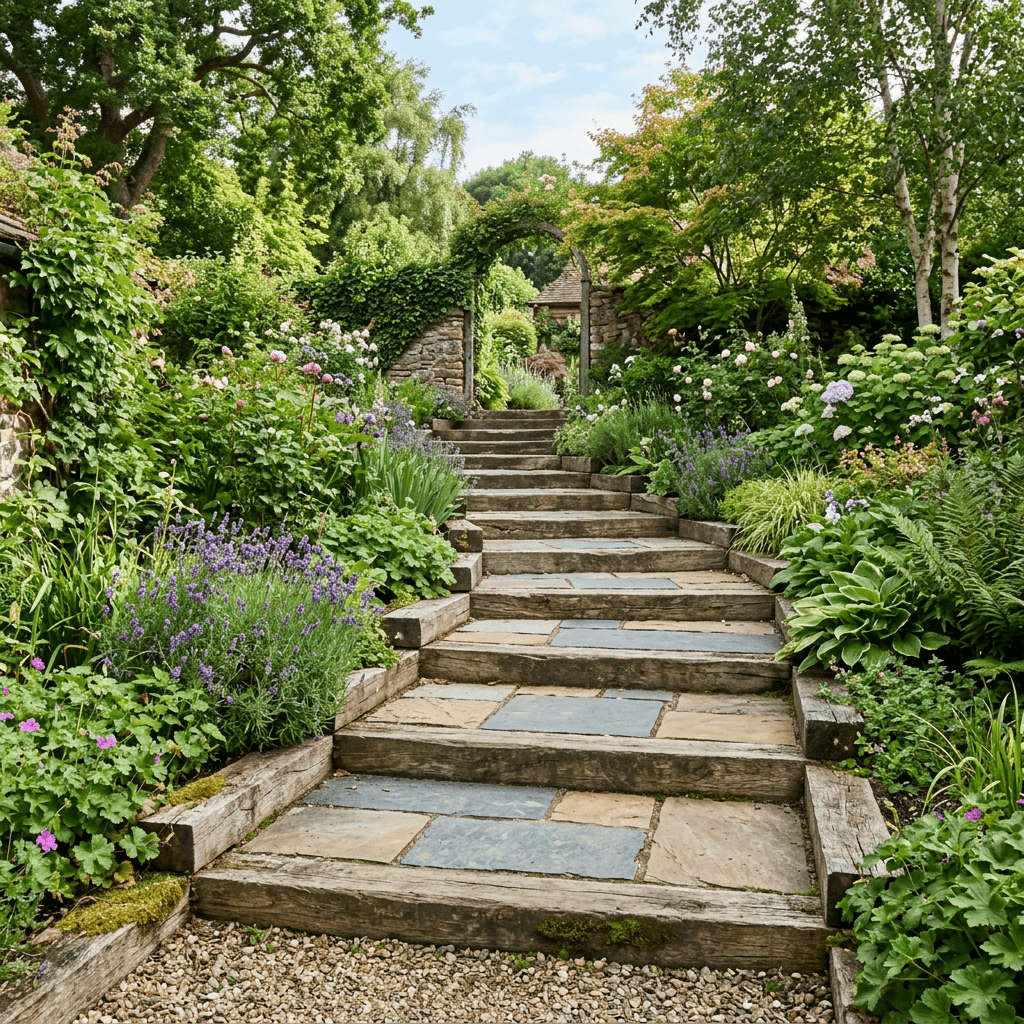
Creating a functional and aesthetically pleasing garden path or set of steps enhances your outdoor space's accessibility and visual appeal. Selecting the right material is crucial, as it impacts durability, maintenance, and overall design. In this guide, we'll explore the top five garden step materials, examining their pros and cons to assist you in making an informed decision.
Main Article : The Complete Guide to Garden Steps: Design, Materials, and Safety
1. Concrete Steps
Concrete steps are a popular choice due to their strength and versatility.
Pros:
- Durability: Concrete is highly durable and can last for decades with proper installation.
- Versatility: Available in various colors and textures, concrete can be customized to fit different design preferences.
- Cost-Effective: Generally more affordable than premium materials like stone.
Cons:
- Cracking: Concrete may develop cracks over time, especially if the ground shifts or drainage is poor.
- Maintenance: Requires sealing to protect against stains and water damage.
- Aesthetics: Without decorative finishes, concrete can appear plain.
2. Timber Steps
Timber steps offer a natural and warm appearance, blending well with various garden styles.
Pros:
- Natural Look: Provides a rustic charm that complements traditional and contemporary gardens.
- Customizable: Easy to cut and shape, allowing for unique designs.
- Cost-Effective: Generally more affordable than stone or metal options.
Cons:
- Maintenance: Requires regular sealing or staining to prevent rot and maintain appearance.
- Durability: Susceptible to termites and decay, especially in damp conditions.
- Slipperiness: Can become slippery when wet or moldy in shaded areas.

You may also like : 10 Stunning Garden Step Designs to Inspire You
3. Stone Steps
Stone steps add a timeless and elegant touch to any garden.
Pros:
- Aesthetic Appeal: Offers a classic and sophisticated look.
- Durability: Highly durable and can withstand various weather conditions.
- Slip Resistance: Textured stones provide excellent grip, reducing the risk of slipping.
Cons:
- Cost: Higher upfront cost compared to many other materials.
- Weight: Heavy material that may require professional installation.
- Maintenance: Some stones need sealing to protect against staining.
4. Composite Steps
Composite steps combine the appearance of wood with the durability of synthetic materials.
Pros:
- Low Maintenance: No need for staining or sealing.
- Durability: Resistant to termites, rot, and fading.
- Aesthetics: Available in various colors and textures to mimic natural wood.
Cons:
- Cost: Higher initial cost compared to timber.
- Heat Retention: Can become hot under direct sunlight.
- Limited Customization: Less flexibility for unique designs compared to natural wood.
5. Brick or Paver Steps
Bricks and pavers offer a classic and versatile option for garden steps.
Pros:
- Aesthetic Versatility: Available in various colors, shapes, and patterns to suit different styles.
- Durability: Resistant to weathering and can last for many years.
- Maintenance: Individual bricks or pavers can be replaced if damaged.
Cons:
- Installation: Requires a solid foundation to prevent shifting or sinking.
- Weed Growth: Weeds can grow between gaps if not properly sealed.
- Cost: Higher cost compared to some other materials.
Conclusion
Selecting the right material for your garden steps is essential for ensuring safety, durability, and aesthetic appeal. Consider factors such as budget, maintenance requirements, and the overall style of your garden when making your choice. By carefully evaluating the pros and cons of each material, you can create a beautiful and functional garden pathway that enhances your outdoor living space.
Frequently Asked Questions (FAQ)
Q1: Which garden step material is the most cost-effective?
Timber steps are generally the most budget-friendly option. However, they require regular maintenance to prevent rot and decay. Concrete steps offer a balance between cost and durability, making them a popular choice.
Q2: Are composite steps worth the higher initial investment?
Composite steps offer low maintenance and high durability, which can save money in the long run. They are resistant to termites, rot, and fading, making them a worthwhile investment for many homeowners.
Q3: How do I prevent weeds from growing between brick or paver steps?
To prevent weed growth, ensure that the gaps between bricks or pavers are properly sealed. Using a polymeric sand or a similar product can help fill the gaps and prevent weeds from taking root.
Q4: Can stone steps be installed by a DIY enthusiast?
Installing stone steps can be challenging due to their weight and the need for a solid foundation. While some experienced DIY enthusiasts may attempt this, it's often recommended to consult with a professional for proper installation.
Q5: How do I maintain timber steps to prevent rot?
Regularly sealing or staining timber steps helps protect them from moisture and decay. Choosing pressure-treated or naturally rot-resistant wood can also extend their lifespan.