

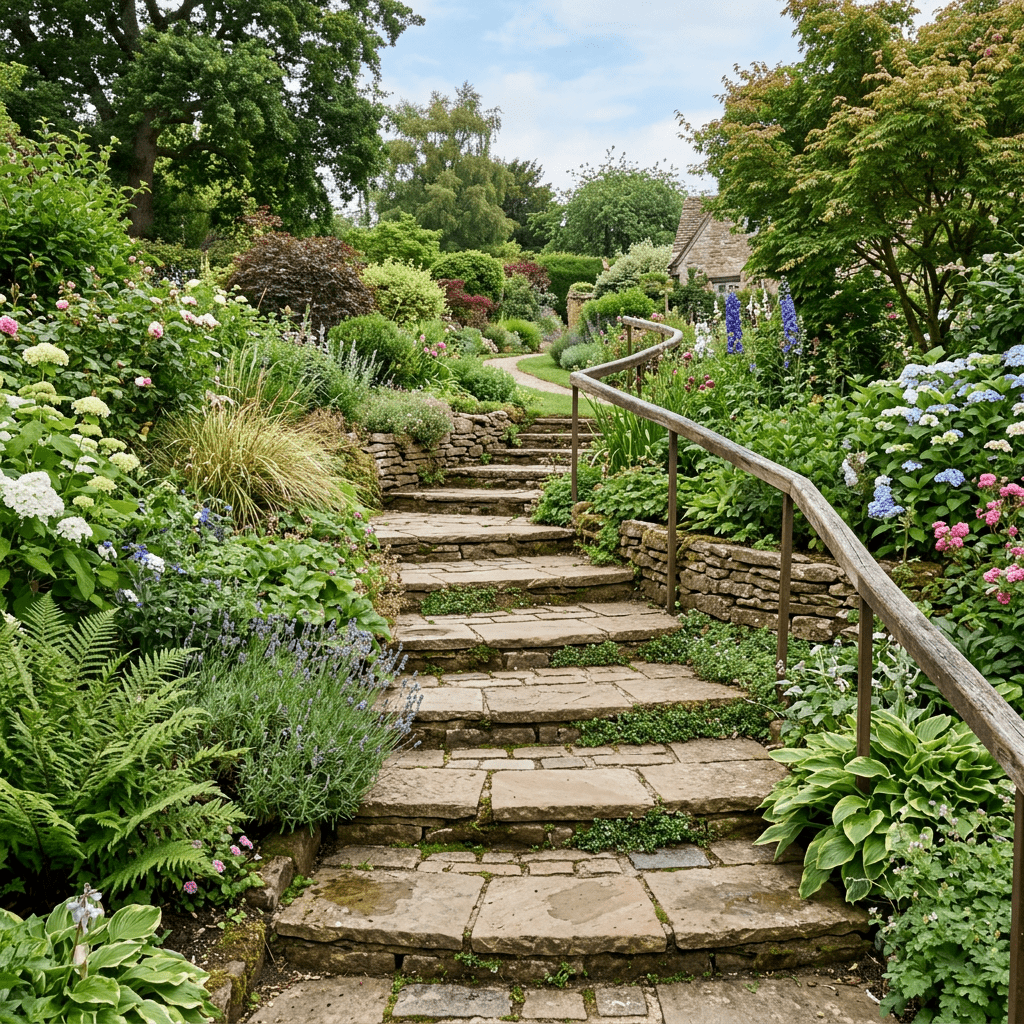
Garden steps are more than just functional elements; they serve as architectural features that can transform your outdoor space. Whether you're navigating a sloped terrain or adding visual interest to a flat garden, the right design can make all the difference. In this guide, we'll explore ten stunning garden step designs, covering materials, styles, and safety considerations to inspire your next landscaping project.
Main Article Source : The Complete Guide to Garden Steps: Design, Materials, and Safety
10 Types Stunning Garden Step Designs
1. Natural Stone Steps
Natural stone steps offer timeless elegance and durability. Materials like granite, slate, or sandstone provide unique textures and colors that blend seamlessly with various garden styles. Their irregular surfaces create a handcrafted look, adding character to your landscape. Proper installation is crucial to ensure stability and prevent shifting over time.
2. Wooden Timber Steps
For a rustic charm, wooden timber steps are an excellent choice. Cedar and redwood are particularly suitable due to their natural resistance to decay. These materials can be stained or sealed to enhance their longevity and appearance. Wooden steps work well in wooded areas or gardens aiming for a natural aesthetic. Regular maintenance, such as resealing, will keep them looking their best.
3. Concrete Steps with Modern Designs
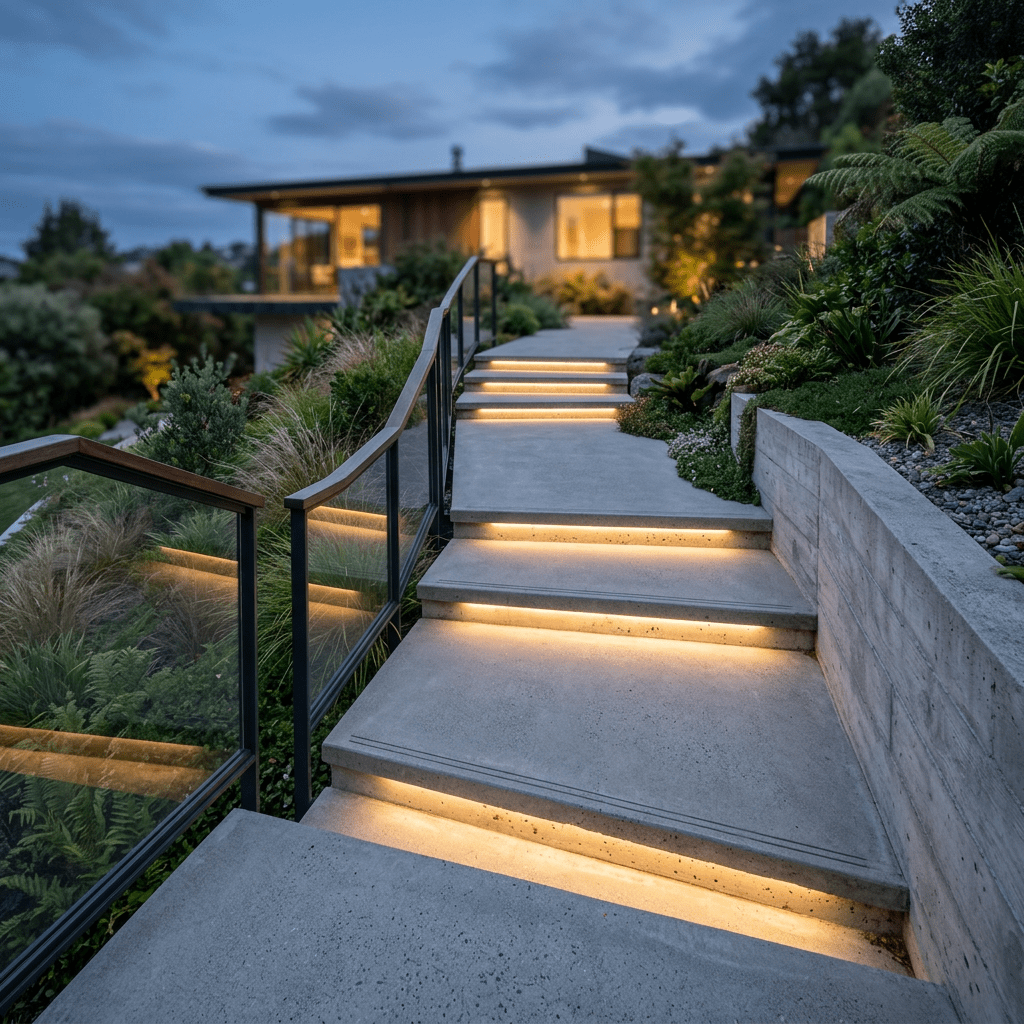
Concrete steps provide a sleek, modern look and can be molded into various shapes and sizes. They are low-maintenance and versatile, making them suitable for contemporary gardens. Adding features like lighting or decorative tiles can further enhance their appeal. Ensure proper drainage to prevent water pooling and potential damage.
4. Gravel and Timber Steps
Combining gravel with timber creates a relaxed and natural garden step design. The contrast between the coarse gravel and smooth timber adds visual interest. Timber risers can be stained or painted to match your garden’s theme, while gravel provides excellent drainage and is easy to maintain. This design works well in informal gardens and is perfect for sloped areas where you want to create a gentle, natural flow. (decofond.com)
5. Flagstone Pathway
Flagstone pathways offer a charming and elegant option for garden steps. Their irregular shapes create an organic flow that complements any natural setting. Flagstone is durable and provides a non-slip surface, making it both functional and aesthetically pleasing. This design is ideal for creating a rustic or cottage-style garden. (decofond.com)
6. Floating Wooden Steps
Floating wooden steps create a modern and minimalist look, making them suitable for contemporary gardens. They can be designed to appear as if they are hovering above the ground, adding a sense of lightness and space. Materials like treated wood or composite decking are ideal for this design. Ensure proper support and anchoring to maintain safety and stability. (hello-hayley.com)
7. Spiral Iron Staircase
A spiral iron staircase adds a touch of elegance and can serve as a focal point in your garden. The ornate metalwork against the backdrop of soft, green foliage creates a striking visual that blends man-made and natural elements. This design is suitable for gardens with a vertical element or where space is limited. (hello-hayley.com)
8. Mosaic Tile Garden Steps
Mosaic tile steps add vibrant colors and patterns to your garden, making them a creative and personalized choice. Tiles can be arranged in various designs, from geometric patterns to floral motifs. Ensure that the tiles are suitable for outdoor use and properly sealed to withstand weather conditions. (hello-hayley.com)
9. Log Steps with Rope Handrails
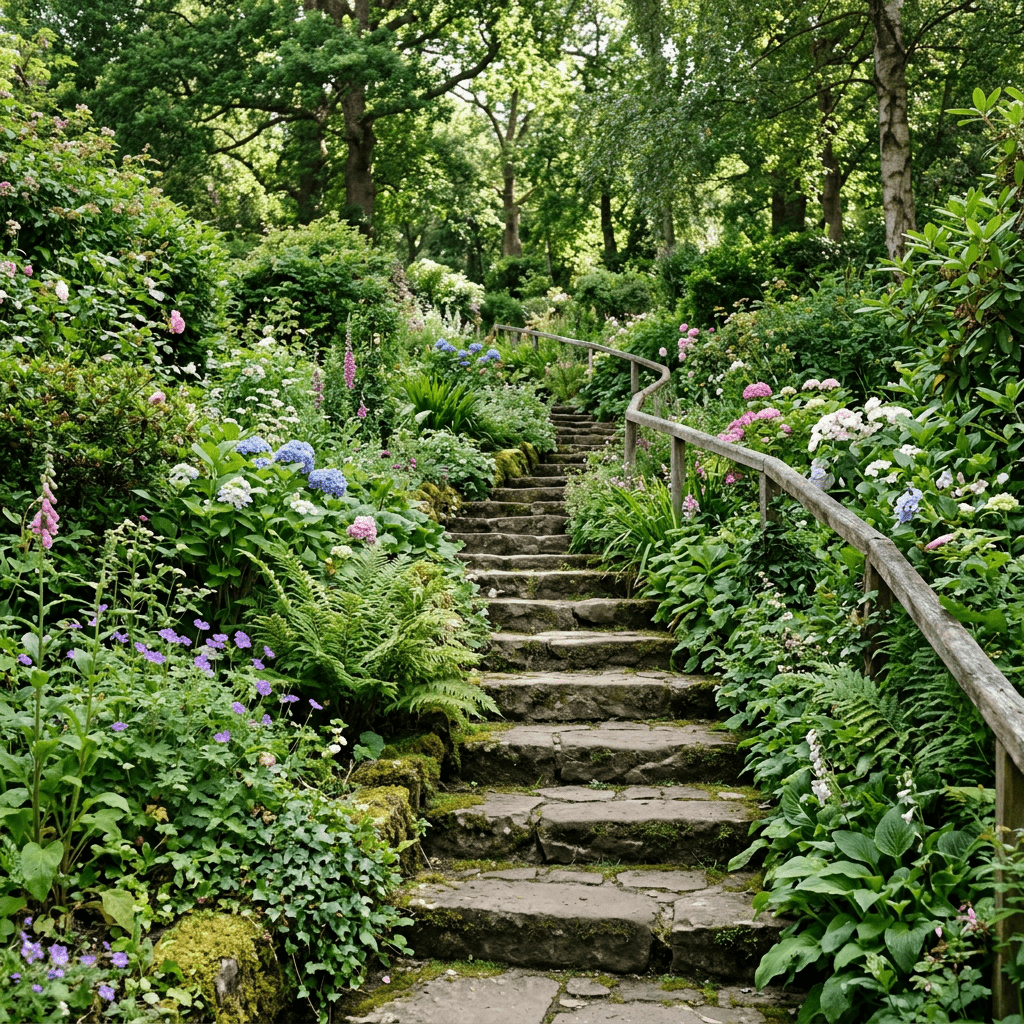
Log steps with rope handrails offer a rustic and adventurous feel, resonating with nature lovers and adding character to wooded paths. This design is ideal for creating a natural, woodland pathway that blends seamlessly with the surrounding flora. (garden.eco)
10. Pebble-Covered Steps
Covering steps with pebbles provides a non-slip surface and adds a natural, beachy vibe. It's a simple way to elevate the tactile quality of your garden paths. Ensure that the pebbles are securely attached to prevent shifting and maintain safety. (garden.eco)
Conclusion
Garden steps are a functional and aesthetic addition to any outdoor space. By choosing the right design and materials, you can enhance your garden's beauty and accessibility. Consider your garden's style, the steps' purpose, and maintenance requirements when making your selection. Remember, well-designed garden steps not only improve functionality but also add character and charm to your landscape.
Frequently Asked Questions (FAQ)
Q1: What materials are best for garden steps?
A1: The choice of material depends on your garden's style, budget, and maintenance preferences. Natural stone offers durability and a timeless look, while wood provides a rustic charm. Concrete is versatile and low-maintenance, and gravel is cost-effective and easy to install.
Q2: How do I ensure the safety of garden steps?
A2: To ensure safety, choose materials with non-slip surfaces, maintain consistent step heights, and incorporate handrails or side supports where necessary. Regular maintenance, such as checking for loose stones or rotting wood, is also essential.
Q3: Can I build garden steps myself?
A3: Yes, many garden steps can be built as DIY projects, especially those using materials like gravel or timber. However, for complex designs or materials requiring specialized skills, it's advisable to consult a professional.
Q4: How do I integrate garden steps into my existing landscape?
A4: To integrate steps seamlessly, choose materials that complement your existing pathways and structures. Incorporate surrounding plants and features to create a cohesive look. For example, adding low-maintenance shrubs or flowering plants along the edges can enhance the design.
Q5: What maintenance do garden steps require?
A5: Maintenance varies by material. Stone steps may need occasional cleaning and sealing, wooden steps require resealing and checking for rot, and concrete steps should be inspected for cracks. Regular upkeep ensures longevity and safety.