

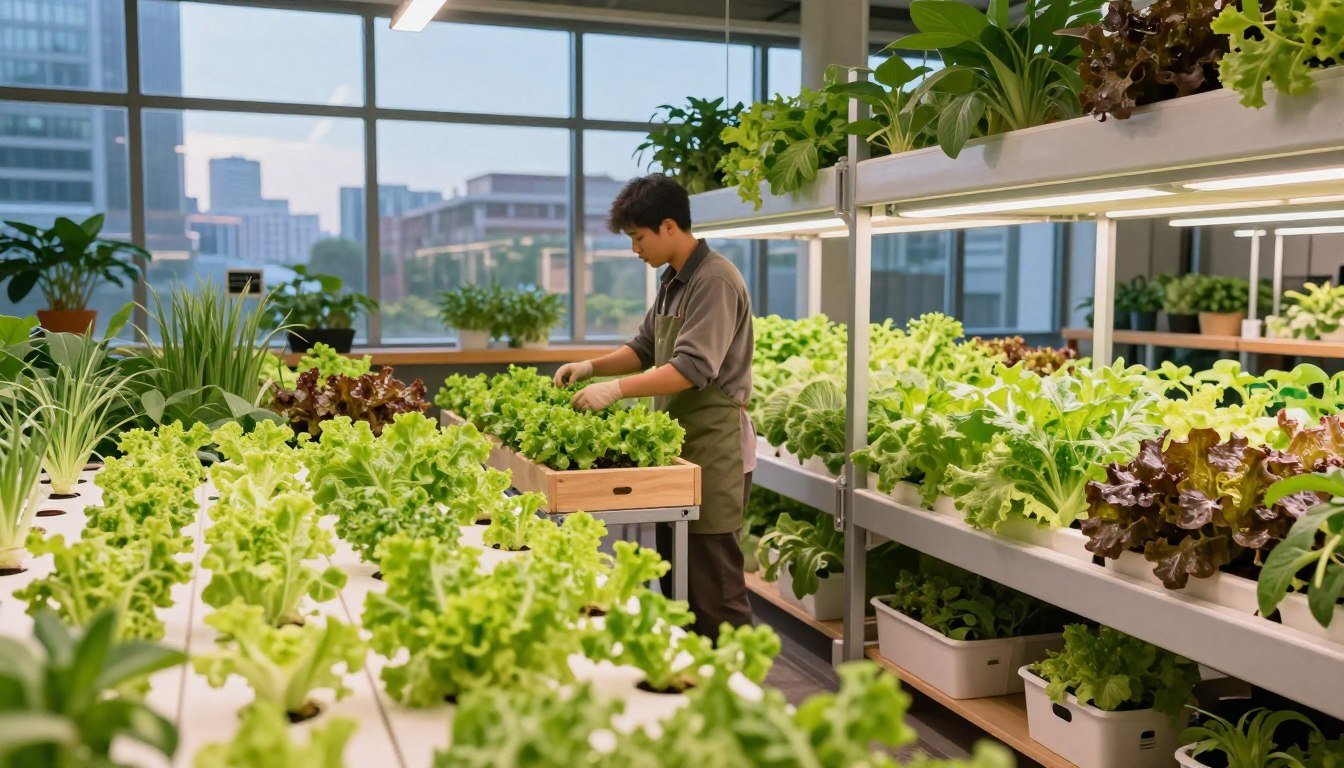
As the world grapples with the challenges of climate change and urbanization, innovative solutions are needed to ensure food security for the growing global population.
One such solution is gaining traction: sustainable agriculture practices that bring food production closer to consumers.
By leveraging cutting edge technologies like hydroponics and vertical farming, it's possible to increase crop yields while minimizing environmental impact.
This approach not only enhances food security but also contributes to a more resilient food system, better equipped to withstand the challenges of a rapidly changing world.
1. Understanding Urban Indoor Farming and Its Growing Importance
The concept of urban indoor farming has gained significant traction in recent years due to its potential to transform urban food systems. As cities continue to grow and the global population increases, finding sustainable ways to produce food becomes more critical.
What Makes Indoor Farming Different
Indoor farming differs significantly from traditional farming methods. It involves growing plants in controlled environments, often within urban settings, using advanced technologies to optimize growing conditions. This method allows for year-round production, regardless of the weather outside, and can be tailored to meet the specific needs of different crops.
The Rise of Controlled Environment Agriculture
Controlled Environment Agriculture (CEA) is at the heart of urban indoor farming. CEA involves controlling factors such as temperature, humidity, and light to create optimal growing conditions. This approach not only enhances crop yields but also reduces the reliance on chemical pesticides and fertilizers, making it a more sustainable option.
From Rooftops to Warehouses: Where Urban Farms Thrive
Urban indoor farms can be found in a variety of settings, from rooftops to abandoned warehouses. The flexibility in location is one of the key advantages of indoor farming, allowing it to thrive in densely populated urban areas. Some of the most common locations include:
- Converted warehouses
- Rooftop gardens
- Basements and underground spaces
- Shipping containers repurposed for farming
These diverse locations enable urban indoor farming to contribute to local food systems, providing fresh produce to urban residents and helping to reduce the carbon footprint associated with transporting food.
2. Why Urban Indoor Farming is a Sustainability Game-Changer
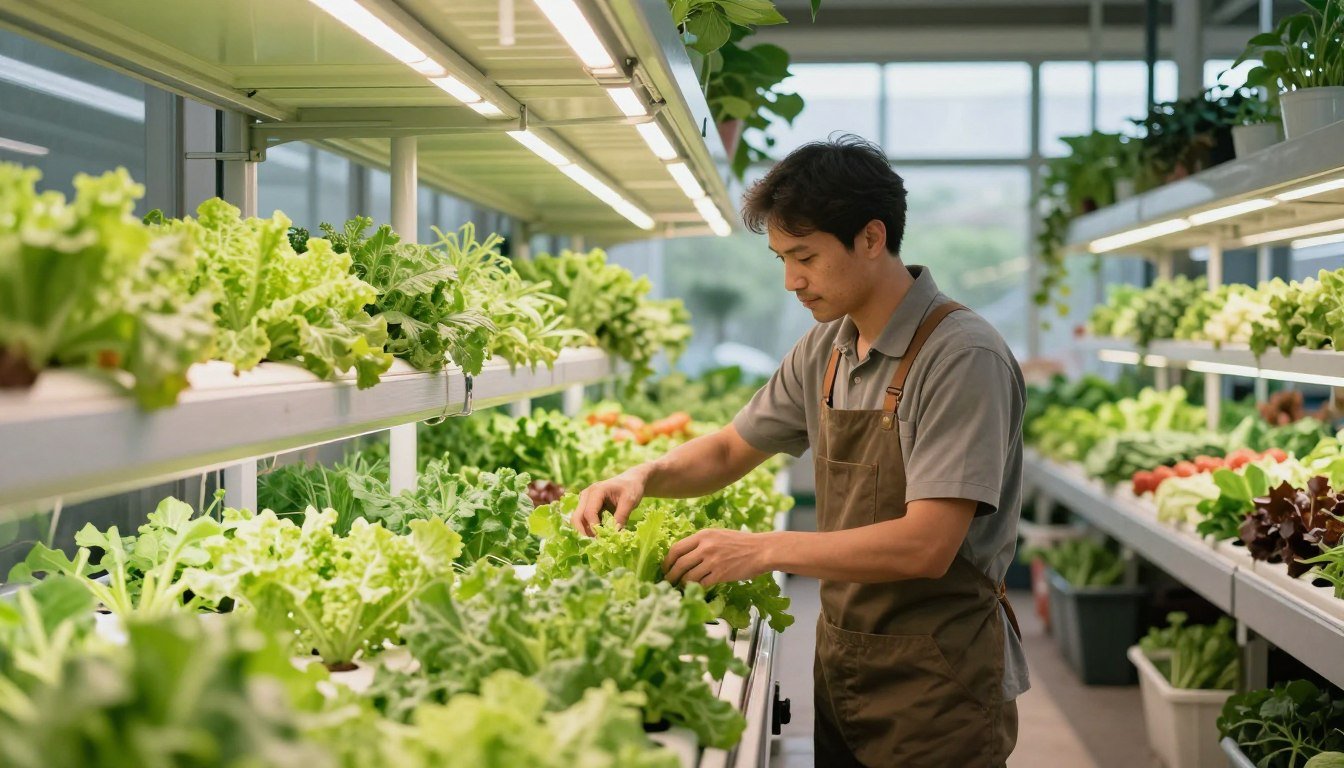
As the world grapples with environmental challenges, urban indoor farming emerges as a beacon of sustainability. By leveraging cutting-edge technologies like hydroponics and vertical farming, urban indoor farming is redefining the future of sustainable agriculture.
sustainable agriculture
Dramatically Lower Water Usage
One of the most significant advantages of urban indoor farming is its ability to conserve water. Traditional farming methods can be extremely water-intensive, whereas indoor farms use advanced hydroponic systems that recirculate water, reducing consumption by up to 90%. This dramatic reduction in water usage is crucial in areas where water scarcity is a growing concern.
Eliminating Food Miles and Transportation Waste
Urban indoor farming allows for the production of fresh produce right in the heart of cities, significantly reducing food miles. By minimizing the distance between the farm and the consumer, we can decrease transportation-related emissions and waste. This not only benefits the environment but also ensures that consumers receive fresher, healthier produce.
Reliable Food Production in Any Season
Indoor farming operates independently of external weather conditions, enabling the consistent production of crops regardless of the season. This reliability is a game-changer for food security, as it ensures a steady supply of fresh produce to local communities throughout the year.
Addressing Urban Food Deserts
Many urban areas suffer from "food deserts," where access to fresh, healthy food is limited. Urban indoor farming can help alleviate this issue by establishing farms in these underserved areas, providing residents with direct access to nutritious produce. This not only improves public health but also supports local economies.
In conclusion, urban indoor farming is a powerful tool in the quest for sustainability. Its numerous benefits, from water conservation to addressing urban food deserts, make it an indispensable part of our future food systems.
3. Innovative Technologies Behind Modern Indoor Farms
The backbone of modern indoor farming lies in its innovative technologies, which enable growers to control and optimize every aspect of the growing environment. These advancements have transformed indoor farming into a highly efficient and productive method of agriculture.
Hydroponic Growing Systems
Hydroponics is a cornerstone of modern indoor farming, allowing crops to be grown in a nutrient-rich solution rather than soil. This method offers several advantages, including increased crop yields and water efficiency. Within hydroponic systems, there are several techniques used to deliver nutrients to plants.
Nutrient Film Technique
The Nutrient Film Technique (NFT) involves a continuous flow of nutrient-rich solution over the roots of plants. This method ensures that plants receive a constant supply of nutrients, promoting healthy growth.
Deep Water Culture
Deep Water Culture (DWC) is another popular hydroponic method where plants are suspended in a nutrient-rich solution. This technique is particularly effective for growing leafy greens and other crops that thrive in moist environments.
Aeroponic and Vertical Farming Solutions
Aeroponics takes hydroponics a step further by delivering nutrients to plant roots through a fine mist, rather than a solution. This method can lead to even greater water efficiency and crop yields. Vertical farming, which often incorporates aeroponics, maximizes space by stacking layers of crops, making it ideal for urban environments.
Smart LED Lighting for Optimal Growth
LED lighting has revolutionized indoor farming by providing a highly controllable and efficient light source. Modern LED grow lights can be tailored to specific crop needs, optimizing growth rates and reducing energy consumption. The use of LED lighting also allows for 24/7 operation, further increasing productivity.
Sensors, Automation, and Data Analytics
The integration of sensors, automation, and data analytics has brought a new level of sophistication to indoor farming. Sensors monitor environmental conditions, such as temperature and humidity, while automation systems adjust lighting, watering, and nutrient delivery in real-time. Data analytics platforms analyze this information to provide insights into crop health and growth, enabling growers to make data-driven decisions.
By combining these innovative technologies, modern indoor farms can achieve remarkable levels of efficiency, productivity, and sustainability. As the global demand for food continues to grow, these advancements will play a crucial role in meeting the needs of urban populations.
4. The Environmental Advantages of Growing Food Indoors
Urban indoor farming is revolutionizing the way we grow food, offering numerous environmental benefits. As the world grapples with the challenges of climate change, environmental degradation, and food security, indoor farming emerges as a sustainable solution.
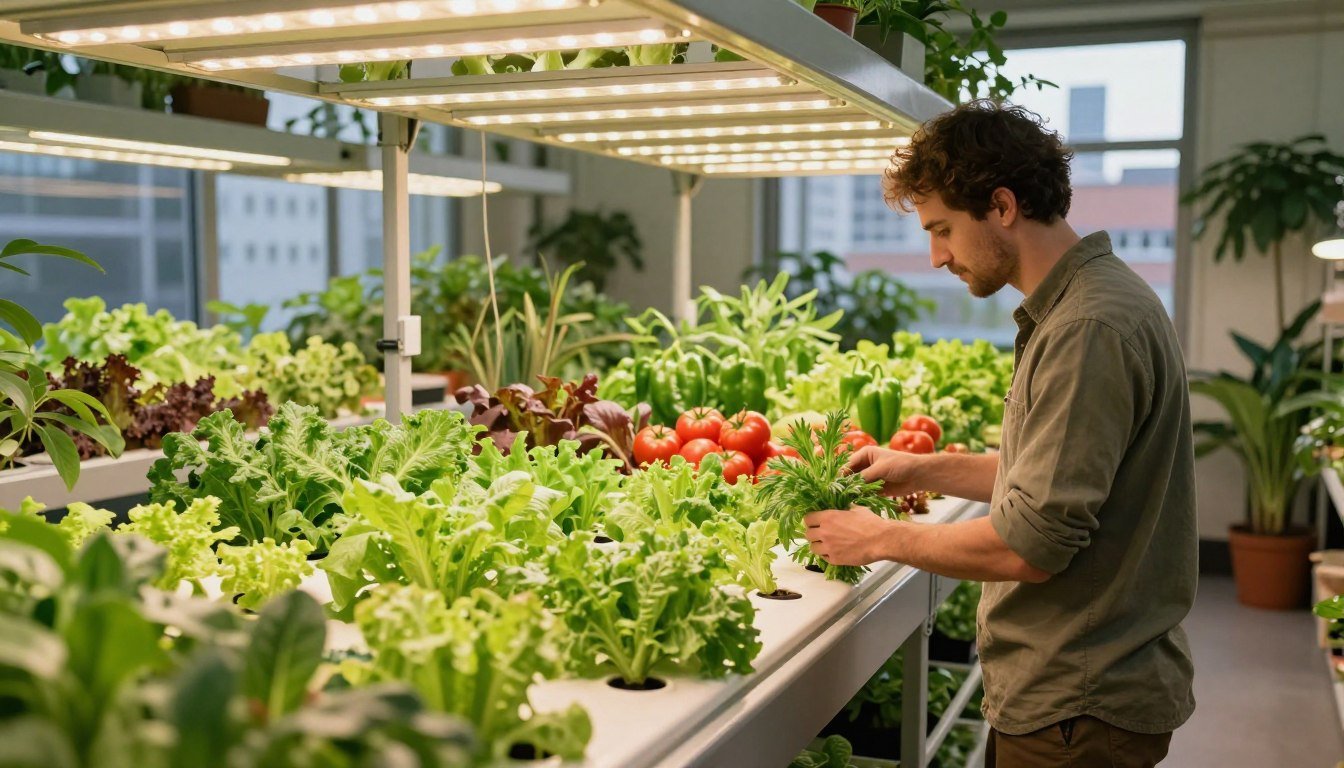
Maximizing Space in Dense Urban Areas is one of the significant advantages of indoor farming. By utilizing vertical space and controlled environments, urban farms can produce a high volume of crops without requiring large tracts of land.
Maximizing Space
Indoor farms can be established in abandoned buildings, warehouses, or even underground facilities, making use of otherwise unused space. This approach not only increases food production but also helps to revitalize urban areas.
Chemical-Free and Organic Production
Indoor farming allows for chemical-free and organic production methods. By controlling the growing environment, farmers can eliminate the need for pesticides, herbicides, and other chemicals, resulting in healthier produce.
urban indoor farming
Reducing Agricultural Runoff
Traditional farming methods often result in agricultural runoff, which can pollute waterways and harm aquatic ecosystems. Indoor farming minimizes this risk by using controlled irrigation systems and recycling water.
Lower Carbon Emissions
Indoor farming also contributes to lower carbon emissions compared to traditional farming methods. By reducing the need for transportation, minimizing energy consumption through efficient LED lighting, and using renewable energy sources, indoor farms can significantly lower their carbon footprint.
- Reduced transportation emissions due to localized production
- Energy-efficient LED lighting systems
- Integration of renewable energy sources
In conclusion, the environmental advantages of growing food indoors are substantial. By maximizing space, promoting chemical-free production, reducing agricultural runoff, and lowering carbon emissions, urban indoor farming offers a sustainable solution for the future of food production.
5. The Business Case for Urban Indoor Farming
The urban indoor farming industry is rapidly evolving, presenting a compelling business case for investors and entrepreneurs alike. As we explore the financial and economic aspects of this innovative sector, it becomes clear that urban indoor farming offers numerous opportunities for growth and profitability.
Initial Investment and Operating Costs
One of the primary considerations for any business venture is the initial investment required to get started. Urban indoor farming is no exception, with significant upfront costs associated with setting up a facility. These costs can include:
- Leasing or purchasing a suitable facility
- Installing hydroponic or aeroponic systems
- Implementing LED lighting and climate control systems
- Investing in automation and monitoring technology
Operating costs, such as energy consumption, water usage, and labor expenses, also play a crucial role in determining the overall viability of an urban indoor farm. However, many of these costs can be mitigated through efficient design and the use of renewable energy sources.
Revenue Streams and Profit Margins
Urban indoor farms can generate revenue through various channels, including:
- Direct-to-consumer sales through farmers' markets or online platforms
- Supplying local restaurants and grocery stores with fresh produce
- Offering subscription services for regular deliveries
- Creating value-added products from their crops
By diversifying their revenue streams, urban indoor farms can improve their profit margins and enhance their overall financial stability. Successful operations can achieve profit margins ranging from 20% to 40%, depending on their scale and efficiency.
Creating Local Jobs and Economic Growth
Beyond their financial returns, urban indoor farms also contribute to local economies by creating jobs and stimulating growth. These farms require a skilled workforce for operations, maintenance, and management, providing employment opportunities in urban areas.
The economic impact of urban indoor farming extends beyond the farms themselves, as they help to revitalize local communities and support related businesses, such as suppliers and equipment providers.
Successful Urban Farming Businesses Across America
Several urban indoor farming businesses have achieved significant success in the United States, serving as models for the industry. Examples include:
- Bright Agrotech, known for their LED lighting solutions and indoor farming expertise
- Green Sense Farms, which operates large-scale indoor farms in multiple states
- AeroFarms, a pioneer in aeroponic indoor farming with a strong focus on sustainability
These businesses demonstrate the potential for urban indoor farming to thrive in various markets across America, from urban centers to more rural areas.
6. Addressing the Challenges Facing Indoor Agriculture
Despite its potential, indoor agriculture encounters several obstacles that need to be overcome for sustainable growth. The main challenges include high energy costs, significant startup barriers, and the need for specialized workforce skills.
Managing Energy Costs and Renewable Solutions
Indoor farming is energy-intensive, but there are ways to mitigate this issue. One approach is by integrating renewable energy sources into farming operations.
Solar Integration
Installing solar panels can significantly reduce reliance on non-renewable energy sources. This not only lowers energy costs but also contributes to a more sustainable operation.
Energy-Efficient Equipment
Using energy-efficient equipment, such as LED grow lights, can also help reduce energy consumption. These lights are designed to provide the necessary spectrum for plant growth while minimizing energy use.
Overcoming High Startup Barriers
The initial investment required for indoor farming can be substantial, including costs for infrastructure, equipment, and initial operational expenses. To overcome these barriers, farmers can explore financing options and government incentives.
Building Expertise and Workforce Skills
Indoor farming requires a workforce with specialized skills, including knowledge of hydroponics, aeroponics, and controlled environment agriculture. Training programs and workshops can help build this expertise.
Achieving Scale While Maintaining Quality
As indoor farming operations expand, maintaining quality can become a challenge. Implementing robust quality control measures and leveraging technology, such as data analytics, can help ensure consistency and high standards.
Conclusion
As the world grapples with the challenges of climate change, population growth, and environmental degradation, urban indoor farming emerges as a beacon of hope. This innovative approach to agriculture not only provides a sustainable solution to the world's growing food needs but also redefines the future of farming.
By harnessing cutting-edge technologies such as hydroponics, aeroponics, and smart LED lighting, urban indoor farming minimizes water usage, eliminates chemical runoff, and reduces carbon emissions. As a result, it offers a reliable and consistent supply of fresh produce, even in the most challenging environments.
The potential of urban indoor farming to transform the way we grow and consume food is vast. As we move forward, it is essential to continue innovating and investing in this field, fostering a more sustainable and food-secure future for generations to come. Urban indoor farming is poised to play a vital role in shaping the future of farming, providing a sustainable solution that benefits both people and the planet.