

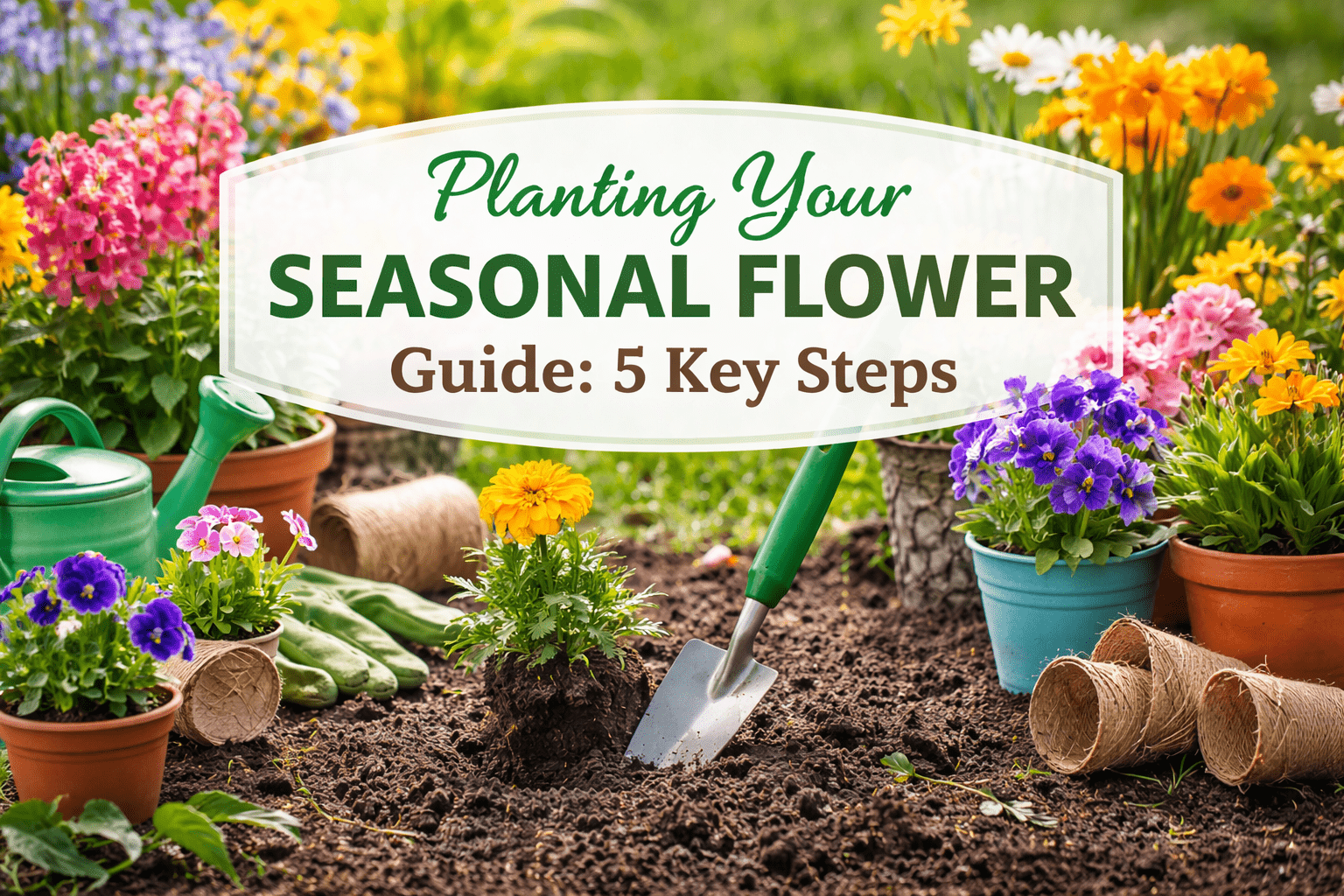
Planting Your Seasonal Flower garden successfully starts with understanding what to plant and when. Seasonal flowers thrive when they are planted in harmony with nature’s cycles, giving gardeners the opportunity to enjoy vibrant colors throughout the year. By aligning planting times with the right climate conditions, you can grow flowers that flourish naturally in each season. Some varieties tolerate frost and cooler temperatures, while others prefer warm soil and bright summer sunshine.
When you follow a thoughtful seasonal approach, your garden becomes more than just a collection of plants—it turns into a living landscape that changes beautifully throughout the year. This Planting Your Seasonal Flower Guide will walk you through five essential steps to help you create a thriving flower garden filled with healthy blooms in every season.
Step 1: Understand Your Local Climate and Seasons
The first step in planting your seasonal flower garden is understanding your local climate and seasonal patterns. Every region has its own planting schedule based on temperature, rainfall, and frost dates. Knowing your climate zone helps you select flowers that will naturally thrive in your environment.
For example, gardeners in cooler regions may need to wait longer in spring before planting warm-weather flowers, while those in milder climates can start earlier. A good practice is to check the last frost date in spring and the first frost date in fall, as these determine the safest planting windows for many flowers.
Gardeners can also benefit from using a regional planting calendar. These calendars provide guidance on the best times to sow seeds, transplant seedlings, or plant bulbs. With the right timing, flowers establish strong roots and grow more vigorously throughout the season.
Step 2: Choose the Right Flowers for Each Season
Selecting flowers suited to each season is one of the most important aspects of planting your seasonal flower garden. Different plants thrive under different temperature conditions, and choosing the right varieties ensures continuous blooms.
Spring Flowers
Spring is the season of renewal, making it perfect for planting cool-weather flowers that tolerate mild frost. Popular choices include:
- Pansies
- Snapdragons
- Sweet peas
- Primroses
These flowers thrive in cooler temperatures and can establish strong roots before the summer heat arrives.
Summer Flowers
Summer gardens are known for their bright colors and fast growth. Warm-weather flowers that love sunlight perform best during this season. Common summer blooms include:
- Zinnias
- Marigolds
- Petunias
- Sunflowers
Plant these flowers after the last frost when the soil begins to warm. With plenty of sunlight and regular watering, they will produce vibrant blooms throughout the season.
Fall Flowers
Fall is often overlooked for planting, but it is an excellent time to prepare your garden for the next year. Bulbs such as tulips and daffodils should be planted during fall so they can experience the cold period they need to bloom in spring.
You can also plant hardy annuals such as:
- Calendula
- Violas
- Poppies
These flowers can brighten cooler months and survive mild winter conditions.
Winter Flowers
In colder regions, winter gardening focuses mainly on protecting plants and preparing for the next growing season. However, in mild climates, some flowers can still grow during winter, including:
- Ornamental kale
- Iceland poppies
- Winter pansies
These plants provide color when most gardens are dormant.
Step 3: Prepare the Soil for Healthy Growth
Proper soil preparation is essential when planting your seasonal flower garden. Flowers need nutrient-rich soil that allows roots to grow easily while retaining enough moisture for healthy development.
Start by loosening the soil in your planting beds to improve drainage and root penetration. Then add organic matter such as compost or well-rotted manure. Compost enriches the soil with nutrients and improves its structure, helping plants grow stronger and healthier.
If your soil is heavy clay or very sandy, mixing compost can greatly improve its quality. Testing your soil’s pH level can also help you determine whether adjustments are needed. Most flowers grow best in slightly acidic to neutral soil.
Preparing the soil before planting ensures your flowers have the ideal environment to grow and bloom successfully.
Step 4: Plant and Arrange Flowers Strategically
Once your soil is ready, it’s time for the most exciting part—planting your seasonal flower garden. Proper planting techniques and thoughtful arrangement can make a big difference in your garden’s appearance and health.
Start by spacing flowers according to their growth requirements. Overcrowding can limit airflow and increase the risk of disease, while proper spacing allows plants to grow freely.
Another useful technique is grouping flowers with similar needs. For example:
- Place sun-loving flowers together in bright areas.
- Group shade-tolerant plants in cooler sections of the garden.
- Combine plants with similar watering requirements.
Layering plants by height also creates a visually appealing garden. Taller flowers like sunflowers or hollyhocks can go at the back of a bed, while shorter varieties such as pansies and alyssum look beautiful at the front.
Step 5: Maintain Your Garden Throughout the Seasons
Maintaining your garden is just as important as planting your seasonal flowers. Regular care helps your flowers stay healthy and ensures they bloom throughout their growing season.
Here are a few essential maintenance tips:
Water Consistently
Most flowers prefer consistent moisture, especially during hot weather. Water deeply rather than frequently to encourage strong root growth.
Use Mulch
Adding mulch around plants helps retain soil moisture, regulate temperature, and prevent weed growth. Mulch also protects plant roots during colder months.
Rotate Plantings
Rotating flowers and other plants each season helps prevent soil nutrient depletion and reduces pest problems. Crop rotation keeps your garden soil balanced and healthy over time.
Remove Dead Flowers
Deadheading, or removing spent blooms, encourages plants to produce more flowers. This simple practice can extend the blooming period of many seasonal flowers.
Creating a Year-Round Blooming Garden
With the right planning and care, planting your seasonal flower garden can bring beauty and color to your outdoor space all year long. By choosing flowers suited to each season, preparing the soil properly, and maintaining your garden regularly, you can create a vibrant landscape that changes beautifully with the months.
Seasonal gardening also allows you to experiment with new varieties and layouts every year. Over time, you’ll learn which flowers perform best in your climate and how to design beds that flourish in every season.
By following this Planting Your Seasonal Flower Guide, your garden can become a dynamic and colorful space filled with healthy blooms throughout the year. Whether you are a beginner gardener or an experienced plant lover, seasonal planting is a rewarding way to keep your garden thriving and full of life. 🌸🌿