

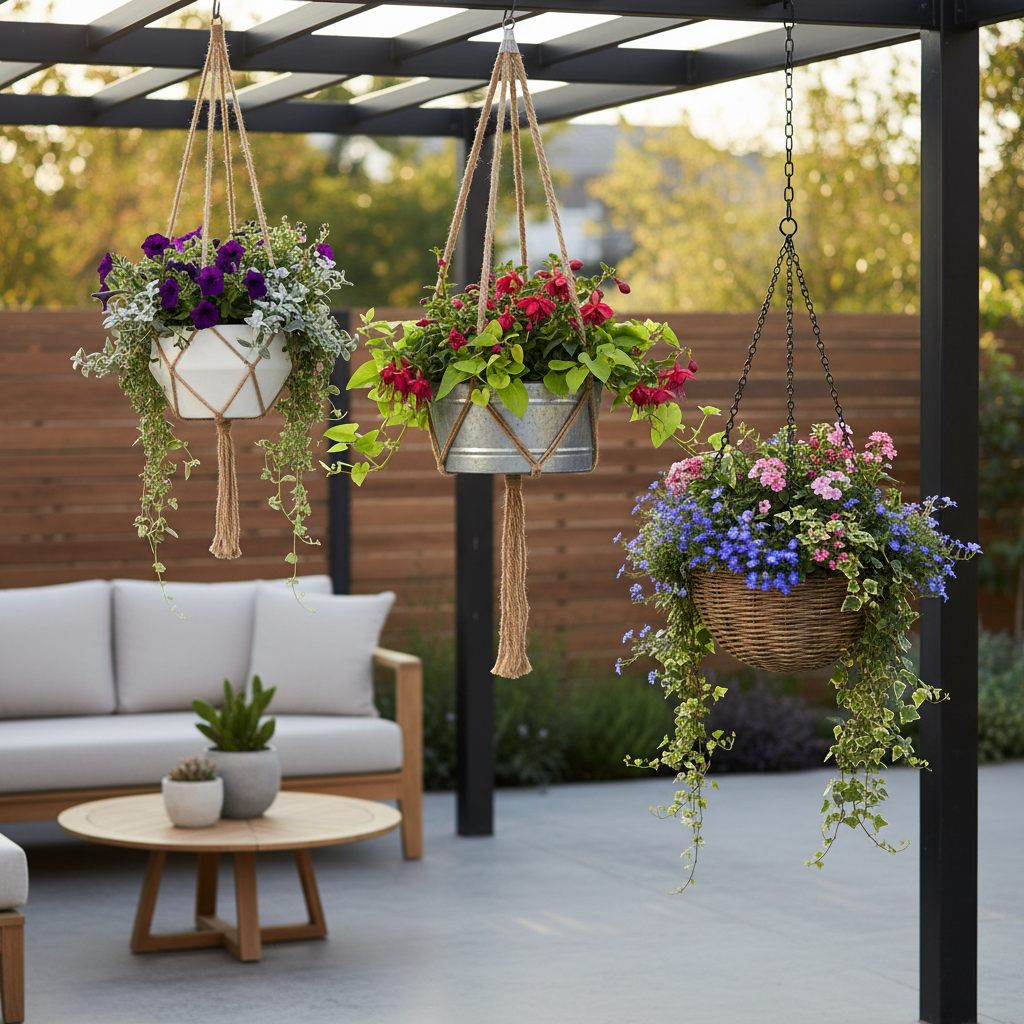
Decorative hanging baskets are an excellent way to add color, texture, and elegance to your outdoor spaces. Whether adorning a porch, patio, or garden, these planters offer a versatile solution for showcasing a variety of plants. In this guide, we'll explore the types of decorative hanging baskets, suitable plant selections, and essential maintenance tips to ensure your hanging baskets thrive throughout the seasons.
Types of Decorative Hanging Baskets
When selecting a hanging basket, consider the material, size, and design to complement your outdoor décor.
Materials
- Wrought Iron Baskets: Known for their durability and classic appearance, wrought iron baskets often come with coco-fiber liners that provide a natural look and excellent drainage. (windowgardensdirect.com)
- Wire Baskets: Lightweight and versatile, wire baskets are easy to handle and can be lined with various materials, including coco coir or sphagnum moss, to support plant growth. (windowgardensdirect.com)
- Plastic Baskets: Affordable and lightweight, plastic baskets are resistant to weathering and come in various colors and designs.
Sizes
Choose a basket size that suits the space and the plants you intend to display:
- Small (10-12 inches): Ideal for compact spaces or single plant displays.
- Medium (14-16 inches): Suitable for a mix of plants, offering a fuller appearance.
- Large (18 inches and above): Perfect for creating a dramatic effect with multiple plant varieties.
Selecting the Right Plants
The success of your decorative hanging basket largely depends on the plant selection and their compatibility with your local climate.
Sunlight Requirements
- Full Sun: Petunias, geraniums, and calibrachoa thrive in direct sunlight.
- Partial Shade: Impatiens, begonias, and fuchsias perform well with limited sun exposure.
Plant Combinations
Creating a harmonious blend of plants can enhance the visual appeal of your hanging basket:
- Thrillers: Tall, upright plants like ornamental grasses or spiky plants.
- Fillers: Bushy plants such as petunias or begonias that fill the middle space.
- Spillers: Trailing plants like ivy or lobelia that cascade over the edges.
Seasonal Considerations
Opt for plants that align with the current season to ensure continuous blooms:
- Spring/Summer: Petunias, geraniums, and calibrachoa.
- Fall: Pansies, ornamental kale, and chrysanthemums.
Planting and Maintenance Tips
Proper planting and care are crucial for the longevity and health of your hanging baskets.
Planting
- Prepare the Basket: Line the basket with a suitable material like coco coir, ensuring it fits snugly against the sides.
- Add Potting Mix: Fill the basket with a high-quality potting mix, leaving about an inch from the top to allow space for watering.
- Plant Selection: Arrange your chosen plants, placing taller ones in the center and trailing varieties around the edges.
- Watering: Water thoroughly until excess moisture drains out.
Maintenance
- Watering: Check moisture levels daily, especially during hot weather. Water in the morning to reduce evaporation. (extension.oregonstate.edu)
- Fertilizing: Apply a balanced, water-soluble fertilizer every 2-4 weeks to promote healthy growth.
- Pruning: Regularly remove dead or yellowing leaves and spent flowers to encourage new growth.
- Replanting: Replace plants that have outgrown their space or are no longer thriving to maintain a vibrant display.
Displaying Your Hanging Baskets
Strategic placement can enhance the visual impact of your hanging baskets:
- Porches and Patios: Hang baskets at eye level to create a welcoming atmosphere.
- Garden Hooks: Use shepherd’s hooks to position baskets among garden beds for added interest.
- Balconies and Railings: Secure baskets to railings to add greenery without occupying ground space.
Troubleshooting Common Issues
Addressing common problems can help maintain the health of your hanging baskets:
- Yellowing Leaves: May indicate overwatering or nutrient deficiencies. Ensure proper drainage and consider adjusting your fertilization routine.
- Leggy Growth: Often a result of insufficient sunlight. Ensure your plants receive adequate light based on their specific needs.
- Pest Infestations: Regularly inspect plants for signs of pests and treat promptly with appropriate methods.
Conclusion
Incorporating decorative hanging baskets into your outdoor décor is a rewarding endeavor that brings beauty and vibrancy to your surroundings. By selecting the right materials, plants, and adhering to proper care practices, you can enjoy a flourishing display that enhances your outdoor living experience.
FAQs
Q1: How often should I water my hanging baskets?
A1: Watering frequency depends on weather conditions and plant types. During hot, dry periods, check moisture levels daily and water as needed.
Q2: Can I leave my hanging baskets outside during the winter?
A2: Many annual plants cannot survive winter temperatures. Consider bringing baskets indoors or replanting with cold-tolerant species for winter interest.
Q3: How do I prevent my hanging baskets from becoming too heavy?
A3: Use lightweight materials for the basket and liner, and choose plants that are appropriate for the basket size to prevent overloading.
Q4: Can I use artificial plants in my hanging baskets?
A4: Yes, artificial plants can be used, especially if you prefer low-maintenance options. Ensure they are UV-resistant to maintain color vibrancy. (artificialflowers.company)
Q5: How do I protect my hanging baskets from strong winds?
A5: Secure baskets with sturdy hangers and consider placing them in sheltered areas or using windbreaks to minimize exposure.