

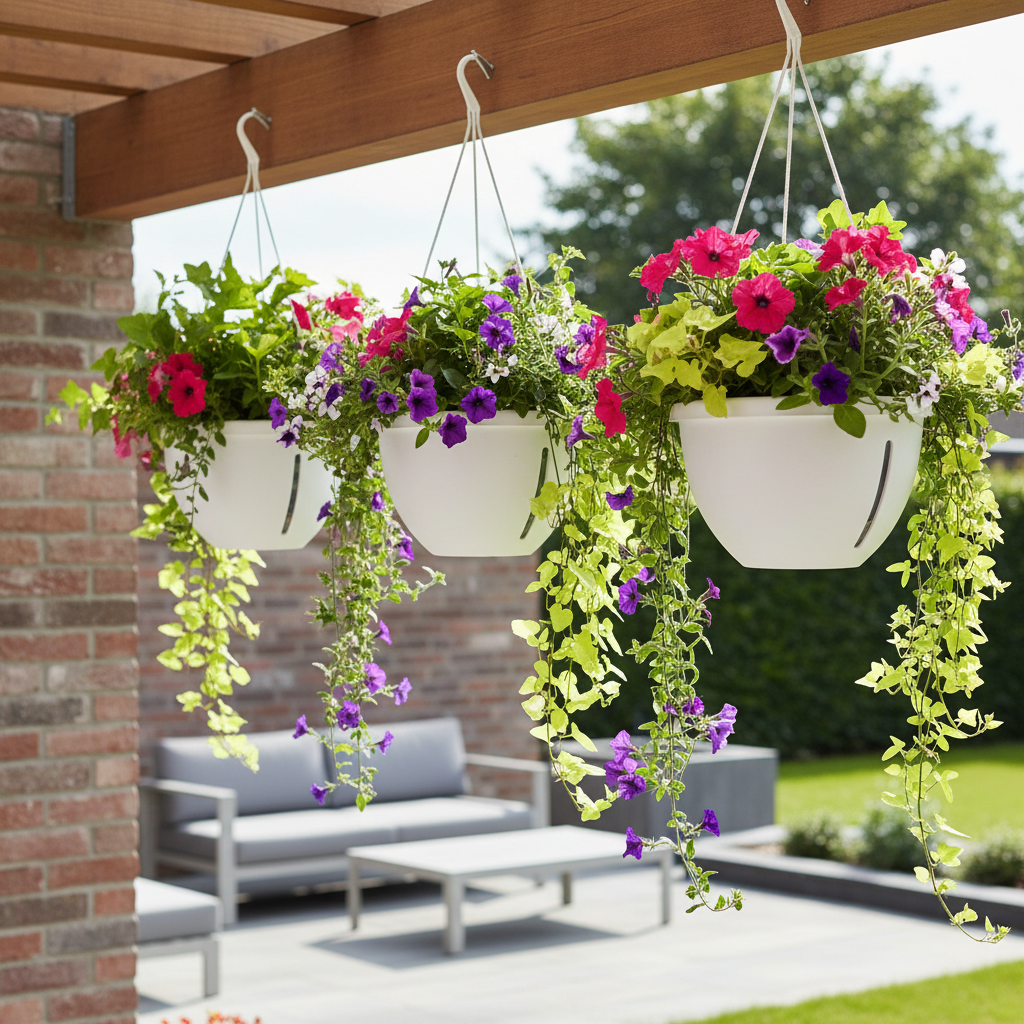
Gardening enthusiasts and homeowners alike are continually seeking ways to simplify plant care while ensuring vibrant, healthy growth. Self-watering hanging baskets have emerged as a game-changer in this pursuit, offering a practical solution to the challenges of traditional plant maintenance.
What Are Self-Watering Hanging Baskets?
Self-watering hanging baskets are innovative planters designed to provide consistent moisture to plants through a built-in reservoir system. This design allows plants to absorb water as needed, reducing the frequency of manual watering and promoting healthier root development.
Benefits of Self-Watering Hanging Baskets
Incorporating self-watering hanging baskets into your gardening routine offers several advantages:
- Reduced Maintenance: With a built-in reservoir, these baskets minimize the need for daily watering, making plant care more manageable.
- Consistent Hydration: The reservoir system ensures plants receive a steady supply of water, preventing both overwatering and underwatering.
- Water Conservation: By delivering water directly to the plant roots, self-watering baskets reduce water waste and promote efficient usage.
- Healthier Plants: Consistent moisture levels support robust root systems, leading to more vigorous and resilient plant growth.
Types of Self-Watering Hanging Baskets
Self-watering hanging baskets come in various designs and materials to suit different gardening needs:
- Traditional Plastic Baskets: These lightweight baskets often feature a built-in reservoir and are available in multiple sizes and colors.
- Decorative Ceramic Baskets: Offering aesthetic appeal, ceramic baskets combine functionality with style, often incorporating self-watering features.
- Commercial-Grade Baskets: Designed for public spaces or large-scale applications, these durable baskets are engineered for longevity and ease of maintenance.
Choosing the Right Self-Watering Hanging Basket
When selecting a self-watering hanging basket, consider the following factors:
- Plant Type: Ensure the basket size and design are suitable for the specific plants you intend to cultivate.
- Location: Consider the environmental conditions where the basket will be placed, such as exposure to sunlight and wind.
- Aesthetic Preferences: Choose a design and color that complement your existing outdoor decor.
Setting Up Your Self-Watering Hanging Basket
Proper setup is crucial for the success of your self-watering hanging basket:
- Select an Appropriate Location: Choose a spot with adequate sunlight and protection from strong winds.
- Prepare the Basket: Fill the reservoir with water, ensuring it reaches the designated level.
- Planting: Use a high-quality potting mix suitable for your chosen plants.
- Initial Watering: After planting, water the soil thoroughly to establish moisture levels.
- Regular Monitoring: Check the water level in the reservoir periodically and refill as needed.
Maintenance Tips
To ensure the longevity and effectiveness of your self-watering hanging basket:
- Regular Inspection: Periodically check for blockages in the reservoir and ensure the wick system is functioning correctly.
- Seasonal Cleaning: At the end of each growing season, clean the basket and reservoir to prevent algae buildup and prepare for the next planting cycle.
- Monitor Plant Health: Keep an eye out for signs of overwatering or underwatering, adjusting your watering habits accordingly.
Troubleshooting Common Issues
Even with the best practices, you may encounter some challenges:
- Algae Growth: If algae forms in the reservoir, clean it with a mild solution of water and vinegar.
- Dry Spots: If certain areas of the soil remain dry, ensure the wick system is properly positioned and functioning.
- Overwatering: If plants exhibit signs of overwatering, such as yellowing leaves, reduce the water level in the reservoir.
Conclusion
Self-watering hanging baskets offer a convenient and efficient way to maintain healthy, vibrant plants with minimal effort. By understanding their benefits, selecting the appropriate type, and following proper setup and maintenance procedures, you can enjoy a flourishing garden throughout the seasons.
FAQs
Q1: How often should I refill the reservoir in my self-watering hanging basket?
The refill frequency depends on the size of the reservoir and the water needs of your plants. Generally, during the growing season, you may need to refill the reservoir every 7 to 14 days. It's essential to monitor the water level regularly and refill as needed.
Q2: Can I use self-watering hanging baskets indoors?
Yes, self-watering hanging baskets can be used indoors, provided they are placed in a location with adequate light for your plants. Ensure the indoor environment has appropriate humidity levels to support plant health.
Q3: Are self-watering hanging baskets suitable for all types of plants?
While many plants thrive in self-watering baskets, it's important to consider the specific water requirements of your chosen plants. Some plants prefer drier conditions and may not be suitable for self-watering systems.
Q4: How do I clean my self-watering hanging basket?
To clean your basket, remove the plants and soil, then wash the basket and reservoir with a mild soap solution. Rinse thoroughly to remove any soap residue. Allow the basket to dry completely before replanting.
Q5: Can I use self-watering hanging baskets for vegetables?
Yes, self-watering hanging baskets can be used for certain vegetables, especially compact varieties. Ensure the basket size is appropriate for the vegetable's growth and that the plant's water needs align with the self-watering system.
By incorporating self-watering hanging baskets into your gardening routine, you can enjoy a more manageable and productive gardening experience, leading to lush, thriving plants with less effort.