

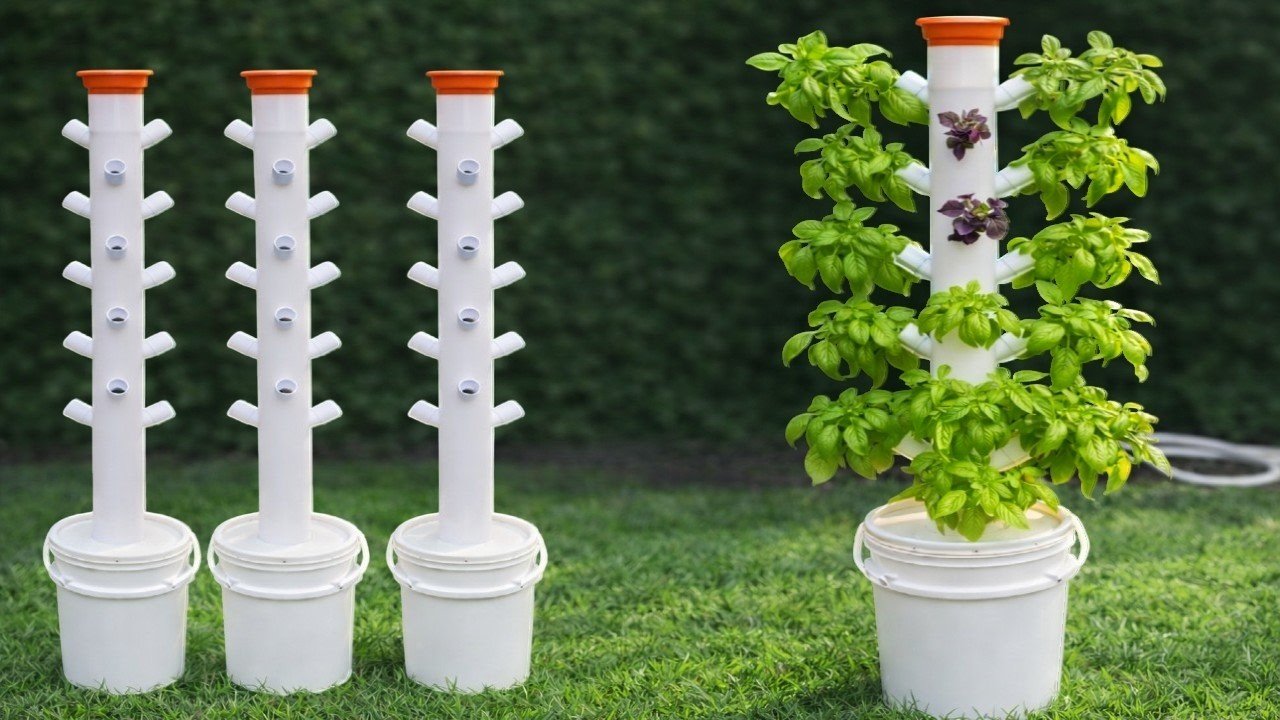
Sustainable urban gardening is easier than ever with vertical hydroponics. Based on the expert tutorial from MiradasBiologicas, this article outlines a step-by-step guide to building an efficient vertical hydroponic system using PVC pipes—perfect for small spaces like balconies or patios.
Why Choose a Vertical Hydroponic System?
- Space-Saving: Grow dozens of plants in less than two square feet of floor space.
- Water Efficient: Hydroponics uses up to 90% less water than traditional soil gardening.
- Faster Growth: Plants receive nutrients directly through their roots, leading to quicker development.
- Low Maintenance: No weeding required, and minimal risk of soil-borne pests.
Materials and Tools Needed
To follow this build, you will need the following items:
- PVC Pipe (110mm): Approximately 1.5 meters high.
- PVC Elbows: To hold the plants.
- A Large Bucket: This acts as the nutrient reservoir.
- Submersible Water Pump: Capable of lifting water at least 1.5 meters.
- Opaque Tubing: To prevent algae growth.
- PVC Glue and Silicone.
- Small Plastic Pot: To create the "rain" distribution head.
- Synthetic Fiber or Sponge: To secure the plant stems.
Step-by-Step Construction Guide
1. Preparing the Main PVC Column
Select a 110mm PVC pipe. A height of 1.5 meters is recommended to maintain stability. Keep in mind that a portion of the pipe will sit inside the reservoir bucket to house the nutrient solution.
2. Marking and Drilling
Depending on your light source, you can arrange your plants in different patterns. A four-way cross is best if light hits all sides, while a three-way pattern is ideal if the unit is placed against a wall. Mark your holes with consistent spacing between rows and between plants in the same line. Use a hole saw to create the openings for the PVC elbows.
3. Modifying the Elbows (The "Pot-less" Secret)
The beauty of this system is that it doesn't require individual pots. Modify the PVC elbows by cutting a small portion off the internal end. This prevents them from overlapping inside the main tube, leaving the center clear for the nutrient "rain" to reach the roots directly.
4. Setting Up the Reservoir and Pump
Glue a PVC cap to the bottom of your bucket to keep the column stable. Place your aquarium pump in the bucket and ensure the tubing is opaque rather than transparent to stop sunlight from triggering algae growth. Drill holes at the bottom of the main column so water can circulate and aerate back into the reservoir.
5. Creating the Nutrient "Rain" Head
Place a small, perforated plastic pot at the top of the column. Connect your pump's hose to the center of this pot. As the pump runs, water will fill the pot and drip through the holes like rain, soaking the roots of every plant in the column.
Pro-Tips for a Successful Harvest
Avoid Nutrient Overflows
Install an "emergency drain" at the top of your distribution pot. If the main drip holes get clogged by debris, this overflow pipe will redirect the water back into the system instead of letting it spill on your floor.
Temperature Control
Always use white PVC pipes. Black or dark colors absorb too much sunlight, which can overheat the nutrient solution and damage sensitive roots.
Planting and Pruning
When placing your plants, wrap the stems in a bit of synthetic fiber to keep them upright without soil. To increase your production, prune your herbs just below two nodes; this encourages the plant to branch out and grow more leaves.
Conclusion
Building a vertical hydroponic system is a rewarding project that provides fresh, organic produce year-round. By following this PVC method, you create a professional-grade setup that is easy to clean, highly productive, and perfectly suited for modern urban living.
For more details on nutrient formulations and PH levels, refer to the MiradasBiologicas channel.