

Embarking on a home gardening journey can be a rewarding experience, providing you with fresh produce right in your backyard. With the right grow vegetable gardening tips, you can enjoy a bountiful harvest and savor the taste of homegrown vegetables.
Whether you're a seasoned gardener or just starting out, this guide will walk you through the essential techniques for a successful harvest. From preparing the soil to choosing the right varieties, we'll cover the key aspects of vegetable gardening to ensure a thriving garden.
By following these vegetable gardening tips, you'll be well on your way to enjoying a bountiful harvest and making the most of your home gardening experience.
Getting Started with Vegetable Gardening
Embarking on a vegetable gardening journey can be a rewarding experience, providing fresh produce right in your backyard. To ensure a successful start, it's essential to assess your garden's conditions and prepare accordingly.
Assessing Your Garden Space and Sunlight
Before planting, evaluate your garden's space and sunlight. Most vegetables require at least 6 hours of direct sunlight per day. Consider the layout to avoid shading from nearby structures or trees.
Understanding Your USDA Hardiness Zone
Knowing your USDA Hardiness Zone is crucial for selecting the right vegetables for your climate. This information helps you determine which plants will thrive in your area's temperature conditions.
Essential Tools and Supplies for Beginners
To get started, you'll need some basic gardening tools and supplies. These include a shovel, garden gloves, seeds, and a watering can. Here's a simple table to help you organize your initial investment:
| Tool/Supply | Purpose | Initial Cost |
| Garden Gloves | Protects hands while gardening | $10-$15 |
| Shovel | For digging and soil preparation | $20-$30 |
| Seeds | For planting various vegetables | $5-$10 |

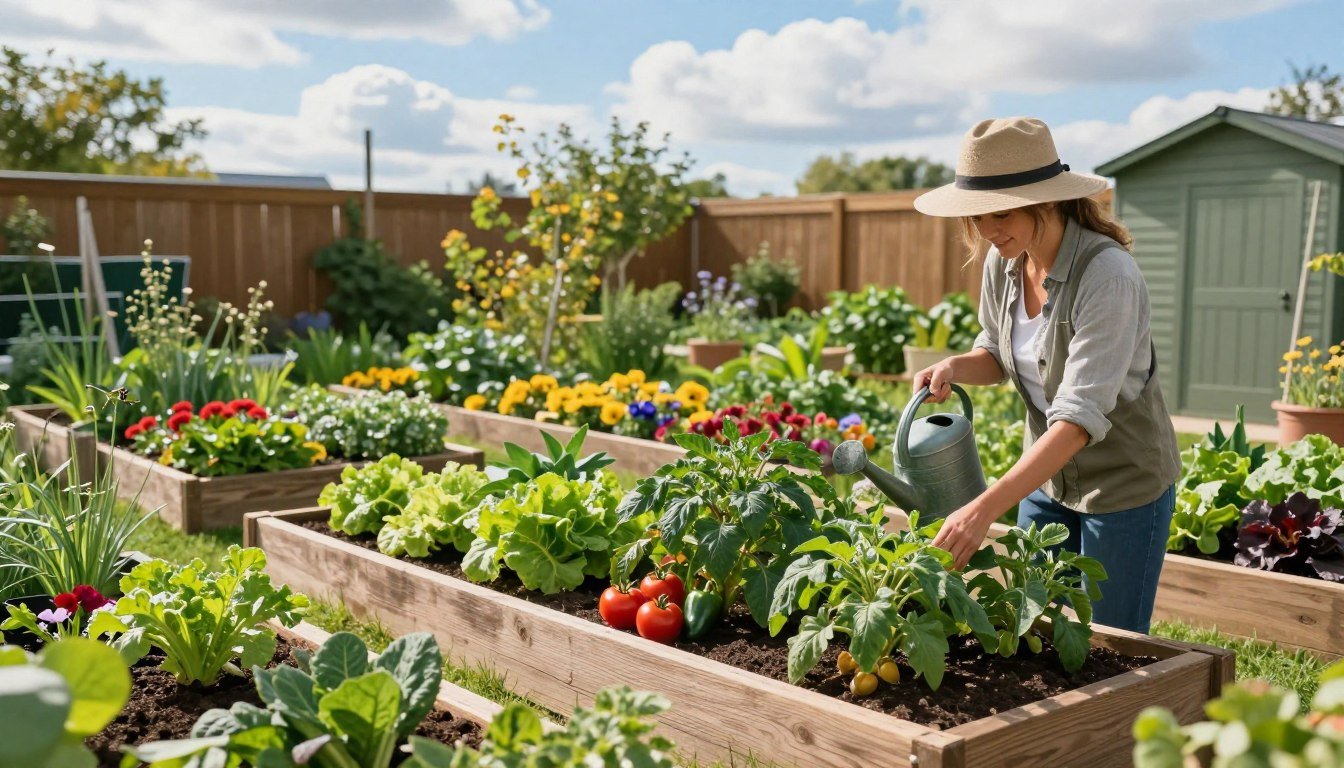
A vibrant vegetable garden scene for beginners, featuring neatly arranged rows of colorful vegetables like tomatoes, carrots, and lettuce. In the foreground, show gardening tools such as a trowel and watering can, with hands gently planting seeds in the rich, dark soil. The middle ground should display young plants thriving under bright, warm sunlight, with a few sturdy stakes supporting climbing plants. The background includes a rustic wooden fence and a blue sky dotted with fluffy white clouds, enhancing the feeling of a serene outdoor space. The atmosphere is lively and hopeful, inviting viewers to imagine the rewards of gardening. Use natural lighting to emphasize the freshness of the scene and capture it from a slightly elevated angle to showcase the variety of plants and tools harmoniously.
By understanding your garden's conditions and gathering the necessary tools, you're well on your way to a successful vegetable gardening experience.
Planning Your Vegetable Garden Layout
A thoughtfully designed garden layout is the foundation of successful vegetable gardening. It not only enhances the aesthetic appeal of your garden but also improves its productivity.
Raised Beds vs. In-Ground vs. Container Gardens
When planning your garden, you have several options to consider: raised beds, in-ground gardens, and container gardens. Raised beds offer better drainage and warmer soil, while in-ground gardens provide more space for root growth. Container gardens are ideal for small spaces and offer flexibility.
Companion Planting for Pest Control and Productivity
Companion planting is a valuable gardening technique that involves growing different plants together to improve growth and reduce pests. For example, planting marigolds with tomatoes can deter nematodes.
Seasonal Planning for Continuous Harvests
To achieve a continuous harvest, it's essential to plan your garden according to the seasons.
Spring Planning
In the spring, focus on planting cool-season crops like lettuce and spinach.
Summer Planning
Summer is ideal for warm-season crops such as tomatoes and peppers.
Fall Planning
In the fall, return to cool-season crops, and consider adding cover crops to improve soil health.
Soil Preparation and Maintenance
Effective soil preparation and ongoing maintenance are the cornerstones of a successful vegetable garden, ensuring optimal growth and yields. A well-prepared soil provides a good structure for plant roots to grow, retains moisture, and supplies essential nutrients.
Testing and Amending Soil for Optimal Growth
Before planting, it's crucial to test your soil to determine its pH level and nutrient content. Based on the test results, you can amend the soil as needed. Adding organic matter like compost can improve soil structure and fertility.
| Soil pH Level | Nutrient Availability | Amendment Needed |
| Too Acidic (<6.0) | Low nutrient availability | Add lime to raise pH |
| Too Alkaline (>7.0) | Reduced micronutrient availability | Add sulfur or peat moss to lower pH |
| Optimal (6.0-7.0) | Good nutrient availability | Maintain with organic matter |
Composting to Build Healthy Garden Soil
Composting is a natural process that recycles organic materials into a rich soil amendment. It enhances soil structure, increases the soil's water-holding capacity, and provides nutrients to plants. To compost effectively, balance "green" materials (like kitchen scraps) with "brown" materials (like dried leaves).
Mulching to Conserve Water and Suppress Weeds
Mulching around plants helps retain soil moisture, suppresses weeds, and regulates soil temperature. Organic mulches like straw, bark chips, or grass clippings are effective and improve soil health as they decompose.
By implementing these soil preparation and maintenance strategies, gardeners can create a fertile and productive growing environment for their vegetables.
How to Grow Vegetable Gardening Successfully
A thriving vegetable garden is the result of a combination of good planning, proper care, and patience. To achieve a bountiful harvest, it's crucial to understand the various techniques involved in growing vegetables.
Starting Seeds Indoors vs. Direct Sowing
One of the first decisions you'll need to make is whether to start your seeds indoors or sow them directly into the garden. Starting seeds indoors allows for better control over the early stages of growth and can give your plants a head start on the growing season. On the other hand, direct sowing is simpler and can be less stressful for the plants. Consider the specific needs of each type of vegetable when deciding.
Proper Planting Depths and Spacing
Proper planting depths and spacing are critical for healthy growth. Planting seeds at the correct depth ensures they receive the right amount of moisture and light. Similarly, adequate spacing prevents overcrowding, reducing the risk of disease and pest issues. Refer to the seed package or a reliable gardening guide for specific guidance on planting depths and spacing for your chosen vegetables.
Watering Techniques for Different Vegetables
Different vegetables have varying watering needs. For example, leafy greens prefer consistent moisture, while root vegetables like carrots require less water. Understanding the specific watering needs of your plants will help you avoid overwatering or underwatering, both of which can be detrimental to your garden's health.
Trellising and Support Systems for Climbing Plants
Climbing plants like peas, beans, and cucumbers benefit greatly from trellising and support systems. These structures allow the plants to grow upwards, maximizing space and improving air circulation, which can help prevent disease. There are various types of trellises and supports available, or you can create your own using materials like twine, stakes, and wire mesh.
By implementing these strategies, you'll be well on your way to growing a successful and productive vegetable garden. Remember, the key to a bountiful harvest is attention to detail and a willingness to learn and adapt as you go.
Maintaining a Healthy Garden
Maintaining a healthy garden involves a combination of techniques that promote growth and prevent problems. A well-maintained garden not only yields more produce but also requires fewer resources over time.
Organic Pest Management Strategies
Using organic methods to manage pests is crucial for maintaining soil health and ensuring the safety of your produce. Techniques include introducing beneficial insects, practicing crop rotation, and using natural pest deterrents.
Preventing and Treating Common Plant Diseases
Diseases can significantly impact garden productivity. Prevention methods include removing infected plants, improving air circulation, and using disease-resistant varieties. Organic fungicides can be used to treat diseases.
Fertilizing Schedule for Maximum Production
A balanced fertilizing schedule is essential for maintaining soil fertility. This includes using compost, manure, and balanced fertilizers at the right times during the growing season.
Weeding Techniques and Tools
Effective weeding is crucial for preventing competition for water and nutrients. Techniques include hand-weeding, hoeing, and mulching. Using the right tools can make weeding easier and more efficient.
| Weeding Technique | Best For | Frequency |
| Hand-weeding | Small areas, precise control | Regularly, as needed |
| Hoeing | Larger areas, surface weeds | Weekly, during growing season |
| Mulching | Suppressing weeds, retaining moisture | Once, at the start of the season |
Best Vegetables for Beginner Gardeners
The key to a thriving vegetable garden for beginners lies in choosing the right vegetables to start with. Selecting varieties that are easy to grow and maintain can make the gardening experience enjoyable and rewarding.
Easy-to-Grow Leafy Greens
Leafy greens such as lettuce, spinach, and kale are perfect for beginners. They are quick to mature and can be harvested in as little as 20 days. These vegetables prefer well-drained soil and partial shade.
Reliable Root Vegetables
Root vegetables like carrots, beets, and radishes are hardy and forgiving. They require minimal care and can thrive in a variety of soil conditions. Ensure the soil is loose and free of rocks for optimal growth.
Productive Fruiting Vegetables
Fruiting vegetables such as tomatoes, peppers, and cucumbers are popular among gardeners. They require adequate sunlight and support for climbing varieties. Tomatoes, for example, need staking to prevent them from sprawling.
Herbs for Cooking and Pest Control
Herbs like basil, mint, and cilantro are not only useful in cooking but also help in pest control. Basil repels aphids and other pests, while mint can deter rodents. Incorporating these herbs into your garden can enhance its overall health.
| Vegetable Type | Days to Harvest | Special Requirements |
| Leafy Greens | 20-30 days | Partial shade, well-drained soil |
| Root Vegetables | 30-60 days | Loose soil, minimal care |
| Fruiting Vegetables | 60-90 days | Adequate sunlight, support for climbing |
Start Your Home Gardening Journey Today
Growing a vegetable garden can be a rewarding experience, providing you with a bountiful harvest of fresh produce right in your own backyard. By following the tips outlined in this article, you can create a thriving home garden that meets your needs and provides a sense of accomplishment.
Proper planning, soil preparation, and maintenance are key to a successful harvest. Whether you're a seasoned gardener or just starting out, the principles outlined here can help you achieve your gardening goals. With a little care and attention, you can enjoy a season of fresh, healthy produce from your very own home garden.
So why not start planning your vegetable garden today? With the right approach, you can enjoy the many benefits of home gardening, from the satisfaction of growing your own food to the joy of sharing your harvest with family and friends.
FAQ
What are the benefits of growing my own vegetables?
Growing your own vegetables provides numerous benefits, including having fresh produce right in your backyard, saving money on grocery bills, and enjoying the therapeutic benefits of gardening. By growing your own vegetables, you can also control the use of pesticides and other chemicals, ensuring a healthier diet for you and your family.
How do I assess my garden space for vegetable gardening?
To assess your garden space, consider the amount of sunlight your garden receives, the quality of your soil, and the available space for planting. Most vegetables require at least 6 hours of direct sunlight per day. You should also test your soil to determine its pH level and nutrient content, and choose a location with good drainage.
What are the essential tools and supplies needed for vegetable gardening?
Essential tools and supplies for vegetable gardening include a shovel, garden fork, rake, watering can or hose, seeds, fertilizers, and mulch. You may also need trellises or other support systems for climbing plants, as well as gardening gloves to protect your hands.
How do I plan my vegetable garden layout for maximum yield?
To plan your vegetable garden layout, consider companion planting, where certain plants are paired to improve growth or deter pests. You should also think about the mature size of each plant and leave enough space for proper air circulation and access. Raised beds, in-ground gardens, and container gardens are all viable options, and you can choose the one that best suits your needs.
What are some easy-to-grow vegetables for beginners?
Easy-to-grow vegetables for beginners include leafy greens like lettuce and kale, root vegetables like carrots and beets, and fruiting vegetables like tomatoes and peppers. Herbs like basil and cilantro are also great choices, and can add fresh flavor to a variety of dishes.
How often should I water my vegetable garden?
The frequency of watering depends on the type of vegetables, climate, and soil type. As a general rule, vegetables need about 1-2 inches of water per week, either from rainfall or irrigation. You should check the soil moisture by inserting your finger into the soil, and water when the top inch of soil feels dry.
How can I manage pests in my vegetable garden organically?
Organic pest management strategies include using natural predators, like ladybugs or lacewings, to control pests, as well as physical barriers, like row covers, to prevent pests from reaching your plants. You can also use organic pesticides, like neem oil or insecticidal soap, to control infestations.
What is companion planting, and how can it benefit my vegetable garden?
Companion planting is the practice of pairing certain plants to improve growth, deter pests, or enhance flavor. For example, planting marigolds with tomatoes can help deter nematodes, while planting basil with tomatoes can improve their flavor. Companion planting can add diversity to your garden and reduce the need for pesticides.