

Grow an indoor herb garden allows you to enjoy fresh, flavorful herbs year-round, right from the comfort of your home. Whether you're a seasoned gardener or a beginner, this guide will walk you through the essential steps to establish and maintain a thriving indoor herb garden.
Introduction
Imagine having a variety of fresh herbs at your fingertips, ready to enhance your culinary creations. An indoor herb garden not only provides convenience but also adds a touch of greenery to your living space. In this article, we'll explore seven essential steps to help you grow an indoor herb garden.
1. Selecting the Right Herbs
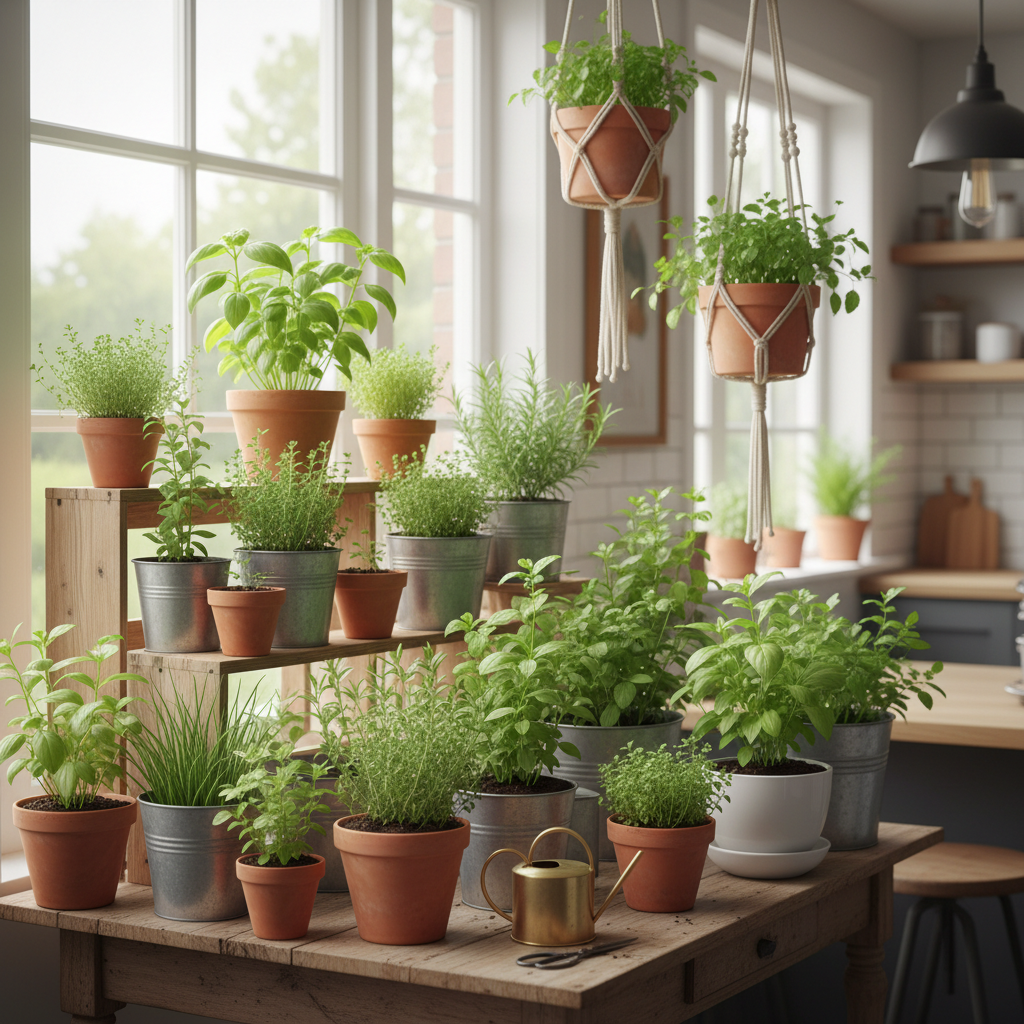
Choosing herbs that are well-suited for indoor environments is crucial for a successful garden. Here are some popular options:
- Basil: Thrives in warm conditions and requires plenty of sunlight.
- Mint: Grows vigorously and is ideal for teas and desserts.
- Parsley: Adds a fresh flavor to various dishes and is easy to maintain.
- Chives: Quick to grow and versatile in the kitchen.
- Oregano: Bold and aromatic, perfect for Italian cuisine.
- Thyme: Compact and fragrant, pairs well with roasted vegetables and meats.
Starting with 3-5 herbs you use most often can make your indoor garden both functional and manageable. (lodhigarden.com)
2. Choosing the Right Containers
Selecting appropriate containers is vital for the health of your herbs. Consider the following:
- Drainage: Ensure pots have drainage holes to prevent waterlogging and root rot.
- Size: Opt for containers that are at least 6 inches in diameter and depth to accommodate root growth.
- Material: Materials like ceramic or terracotta are breathable and help regulate moisture levels.
Using separate pots for each herb allows you to cater to their individual needs. (uwyoextension.org)
3. Providing Adequate Light
Light is a critical factor in indoor herb gardening. Here's how to ensure your herbs receive sufficient light:
- Natural Light: Place your herbs near a south-facing window that receives at least 6 hours of direct sunlight daily.
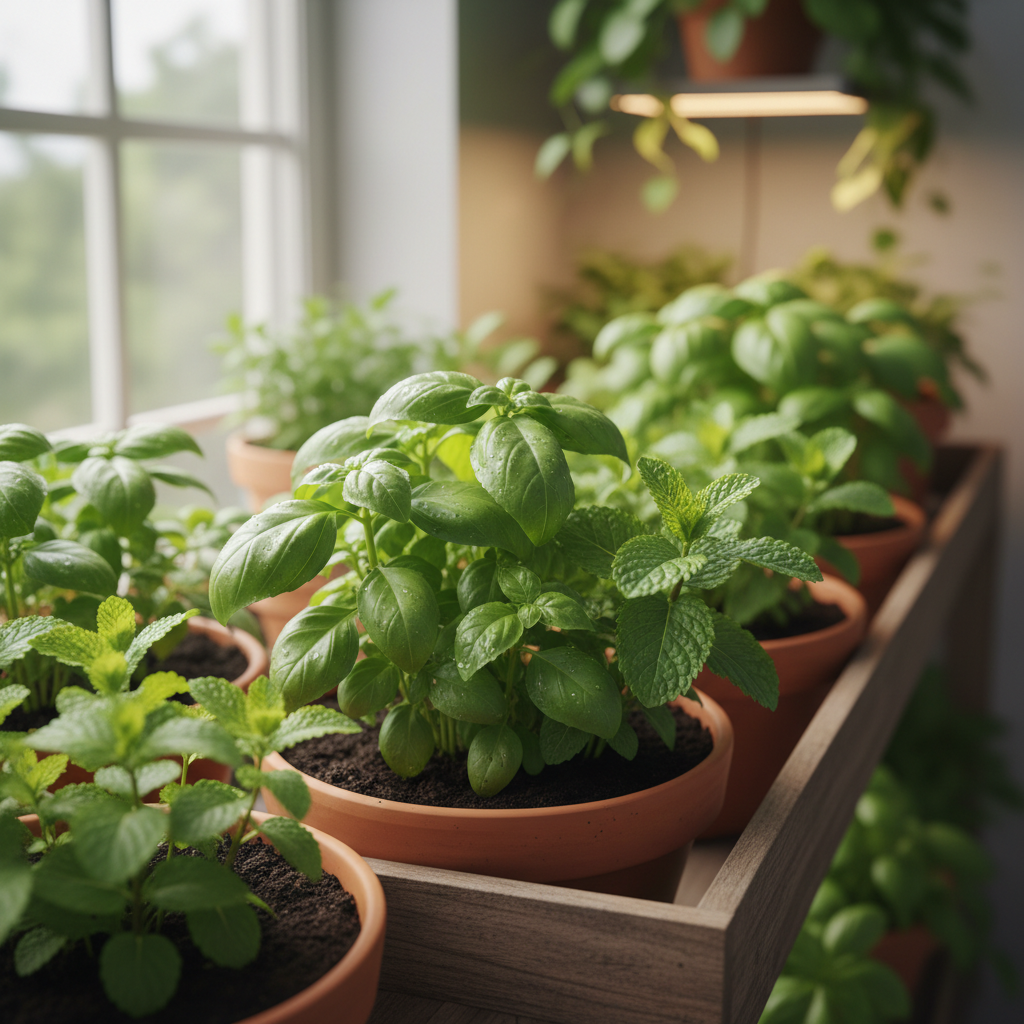
- Artificial Light: If natural light is limited, supplement with a grow light. Position the light about 6–12 inches above the plants and keep it on for 12–16 hours per day. (earthbox.com)
Regularly rotating your pots ensures even growth and prevents plants from leaning toward the light source.
4. Using Quality Potting Mix
The right soil mix supports healthy root development and overall plant vitality. Consider the following:
- Drainage: Use a well-draining potting mix to prevent waterlogging.
- Nutrients: Opt for a mix that includes organic matter to provide essential nutrients.
- pH Level: Aim for a soil pH between 6 and 7, which is ideal for most herbs.
Avoid using garden soil, as it can compact indoors and hinder root growth. (uwyoextension.org)
5. Watering Wisely
Proper watering practices are essential to prevent overwatering and root rot:
- Check Soil Moisture: Before watering, insert your finger into the soil up to the first knuckle. If it feels dry, it's time to water.
- Watering Technique: Water the base of the plant until excess water drains out of the bottom. Ensure the pot has drainage holes to facilitate this.
- Humidity: Indoor air can be dry, especially in winter. Increase humidity by misting the plants or placing a tray of water near them. (uwyoextension.org)
6. Fertilizing Appropriately
Regular feeding supports healthy growth and robust flavor:
- Type of Fertilizer: Use a balanced, water-soluble fertilizer suitable for herbs.
- Application Frequency: Fertilize every 2–3 weeks during the growing season (spring and summer).
- Application Method: Dilute the fertilizer to half strength to prevent overfeeding, which can negatively affect the aroma and taste of your herbs. (uwyoextension.org)
7. Harvesting and Maintenance
Regular harvesting encourages bushier growth and prevents plants from becoming leggy:
- Harvesting Technique: Use clean scissors or your fingers to pinch off leaves or stems just above a pair of leaves.
- Harvesting Frequency: Remove no more than one-third of the plant at a time to avoid stressing it.
- Maintenance: Remove any flowers that appear to keep the plant focused on leaf production.
Regularly check for pests such as aphids or spider mites. If detected, treat promptly to prevent infestations.
FAQ Section
Q1: How much sunlight do indoor herbs need?
Most indoor herbs require at least 6 hours of direct sunlight daily. If natural light is insufficient, supplement with a grow light. (earthbox.com)
Q2: Can I grow herbs from seeds indoors?
Yes, many herbs can be grown from seeds indoors. Follow the seed packet instructions for planting depth and spacing. (almanac.com)
Q3: How often should I water my indoor herbs?
Water when the top inch of soil feels dry. Ensure pots have drainage holes to prevent waterlogging. (uwyoextension.org)
Q4: What is the ideal temperature for indoor herb gardens?
Herbs thrive in temperatures between 65°F and 75°F (18°C to 24°C). Avoid placing them in areas with cold drafts. (smartplantstore.com)
Q5: How can I increase humidity for my indoor herbs?
Increase humidity by misting the plants, placing a tray of water near them, or using a humidifier. (uwyoextension.org)
Conclusion
Establishing an indoor herb garden is a rewarding endeavor that brings fresh flavors to your meals and a touch of nature to your home. By selecting suitable herbs, providing adequate light, using quality soil, and following proper care routines, you can enjoy a thriving indoor garden year-round.
Happy gardening!